Custom table runners last longest when you wash them gently, treat stains quickly, iron on the reverse side and store them rolled rather than tightly folded. Customized Table Runners makes printed, woven and linen table runners for venues, trade show teams and businesses, and the right care routine keeps every logo crisp and every color true across seasons of events.
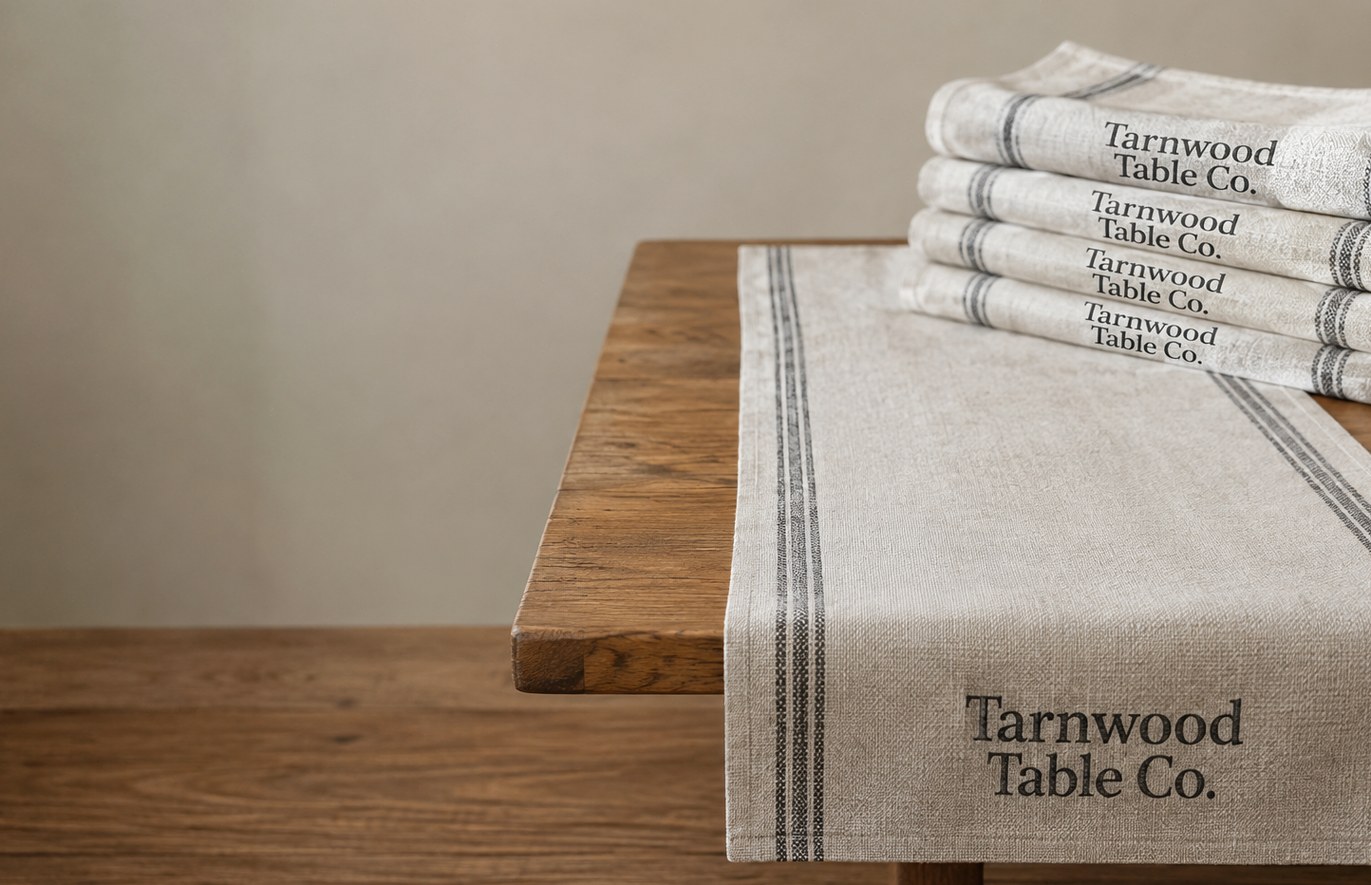
- Gentle washing and no bleach protect printed colors
- Ironing on the reverse side keeps the logo surface smooth
- Rolling runners for storage prevents hard fold lines
- Linen, woven and printed runners each need slightly different care
- Minimum order is 12 runners, with a free mockup within 24 hours
How do you wash a custom table runner without fading the logo?
Wash a custom table runner on a gentle cycle, turned inside out, with a mild detergent and no bleach, and it will keep its color far longer than a runner thrown in with heavy towels. The printed or woven logo is the part guests notice, so every step of the wash should protect that face of the fabric.
Turning the table runner inside out means the logo rubs against the drum and other items less. Washing runners together, rather than with jeans, aprons or anything with zips and hooks, avoids snags and pilling along the hems. Cool or warm water is usually kinder to colors than very hot water, and a short cycle is enough for runners that only saw one evening on a banquet table.
- Always check the care label on your table runners first and follow it over any general advice.
- Use a mild liquid detergent rather than a heavy powder that can leave residue on dark fabrics.
- Skip fabric softener on printed runners if you notice it dulls the finish over time.
- Wash similar colors together so a deep navy runner never tints a cream one.
If you are unsure how a particular fabric will behave, ask Customized Table Runners about care when you request your quote. The team can explain how the material you choose is best washed before you commit to an order.
What is the best way to remove stains from a printed table runner?
The best way to remove a stain from a printed table runner is to act fast: blot, never rub, rinse from the back with cool water and pretreat with a gentle stain remover before the next wash. Most spills on event tables are wine, coffee, sauces and candle wax, and each responds better the sooner you treat it.
Rubbing a stain pushes it deeper into the fibers and can roughen the printed surface. Rinsing from the reverse side pushes the stain back out the way it came in rather than through the logo. Hot water can set protein and sugar stains, so start cool and only warm up if the label allows it.
- Blot the spill with a clean cloth as soon as the table is cleared.
- Rinse cool water through the back of the table runner.
- Apply a mild, color-safe stain remover and let it sit briefly.
- Wash gently, then check the stain before drying, because heat can lock in what is left.
For candle wax, let it harden, lift off what you can, then place paper over the spot and press with a warm iron from the reverse so the paper absorbs the wax. Test any product on a hidden corner of the hem first.
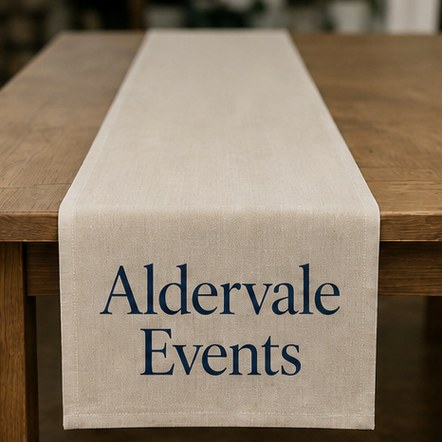
How should you iron or steam a custom table runner before an event?
Iron a custom table runner on the reverse side at the setting the fabric label allows, or steam it hanging, so the printed logo never sits directly under a hot plate. A smooth runner photographs better and lays straight down the center of the table, while creases make even a sharp design look tired.
Steaming is often the quickest option on event day. Hang the table runner over a door or a rail, steam from top to bottom, and let it cool before laying it on the table. For stubborn creases, a pressing cloth between the iron and the fabric adds protection for printed areas and woven detail alike.
Linen runners crease more easily than polyester and benefit from ironing while still slightly damp. Many planners accept a little texture on linen as part of its natural look. Printed show table runners for trade shows usually relax quickly once they are on the table, especially with the front drop hanging free, so a light steam is often all they need.
Do linen, woven and printed table runners need different care?
Yes: linen, woven and printed table runners share the same gentle basics, but each fabric has its own priorities. Printed runners need protection for the printed surface, woven runners need protection from snags in the weave, and linen needs extra attention to creasing and shrinkage.
| Runner type | Main care priority | Practical tip |
|---|---|---|
| Printed table runners | Keeping colors bright and the surface smooth | Wash inside out and iron only on the reverse |
| Woven table runners | Avoiding pulled threads in the pattern | Wash separately from items with hooks or zips |
| Linen table runners | Controlling creases and shrinkage | Iron while slightly damp and avoid high heat drying |
If you are still choosing a style, the guide to printed vs. woven table runners explains how each looks and wears, and the linen and woven table runners page shows the natural-fabric options. Thinking about care before you order helps you pick a fabric that suits how often your runners will be washed.
Is it better to fold or roll custom table runners for storage?
Rolling is usually better than folding for custom table runners, because a roll spreads the pressure evenly and avoids the hard creases that tight folds leave across a logo. If you must fold, fold loosely and away from the printed or woven design so no line cuts through the artwork.
Store table runners clean and completely dry. Even a faint stain or a little dampness can set or develop odors during weeks in a cupboard. A breathable cotton bag or a clean storage bin away from direct sunlight protects colors from fading and keeps dust off the fabric.
- Roll runners around a cardboard tube for a smooth, ready-to-lay finish.
- Label each roll by design or event so staff grab the right set.
- Keep runners out of damp basements, hot attics and sunny windows.
- Avoid plastic bags for long periods, since trapped moisture can cause mildew.
Venues and hotels running an event and venue runner programme often keep clean runners on a dedicated shelf in linen storage, separated by color and size, so setup teams never pull a stained or creased piece by mistake.
How can trade show teams protect table runners while traveling?
Trade show teams protect table runners best by packing them rolled or loosely folded in a dedicated bag, separate from tools, cables and printed literature. A runner that travels with the booth hardware tends to arrive creased, scuffed or marked, which is the opposite of the first impression a booth is meant to make.
Give the table runner its own soft bag or tube inside the shipping case. Add a small travel steamer to the booth kit so creases can be dealt with during setup. At the end of each show, shake out the runner, check it for spills and wash it at home rather than packing it straight into the case for the next event.
Teams that ship kits to several shows at once can order matching sets for each kit, so one runner is never stretched across every event. The page on bulk custom table runners with logo explains how larger programs keep identical runners in every booth kit.
When should you replace custom table runners instead of cleaning them?
Replace custom table runners when cleaning no longer restores them: when colors have visibly faded, stains will not lift, hems are fraying or the fabric has lost its shape and will not lie flat. A worn runner on a sponsor table or a reception counter says more about your brand than no runner at all.
A simple check before each season helps. Lay every table runner out in good light, compare it with a newer piece, and set aside any that look noticeably duller or damaged. Retired runners can still serve back-of-house tables, rehearsals or storage covers.
Reordering is straightforward once your artwork is on file. Customized Table Runners sends a free mockup within 24 hours, offers unlimited free revisions, and you pay nothing until you approve the design. Standard turnaround is about 2 weeks after approval, with faster turnaround available with express shipping, and the minimum order is 12 runners, so topping up a set does not require a large order. Learn more on the how it works page or request a custom quote.
Frequently asked questions
Can custom table runners go in a regular home washing machine?
Most custom table runners can go in a regular home washing machine on a gentle cycle, turned inside out, with a mild detergent. Always follow the care label first, since linen and some woven fabrics may need extra care. Customized Table Runners can explain how the fabric you choose is best washed before you place your order.
How do you get wrinkles out of a custom table runner quickly before guests arrive?
A custom table runner loses wrinkles fastest with a handheld steamer while it hangs over a door or rail. Steam from top to bottom and let the fabric cool before laying it down. For deep creases, iron on the reverse side with a pressing cloth so the printed logo never touches the hot plate directly.
Is it safe to iron directly over the printed logo on a table runner?
Ironing directly over the printed logo on a table runner is not recommended. Turn the runner over and iron from the reverse side, or place a pressing cloth on top, at the heat the care label allows. That protects the printed surface from shine or scorching and keeps the design looking crisp for photos and events.
What is the best way to get red wine out of a table runner after a dinner?
Red wine on a table runner comes out best when you blot it immediately, rinse cool water through the back of the fabric and apply a color-safe stain remover before washing. Avoid hot water and rubbing, which can set the stain. Check the spot before drying, because dryer heat can lock in any remaining color.
Will bleach damage the colors on a custom table runner?
Bleach can fade or blotch the colors on a custom table runner, so keep it away from printed and woven designs. Use a mild, color-safe stain remover instead, and test it on a hidden corner of the hem first. Customized Table Runners recommends gentle products that protect logo colors over many washes.
Can custom table runners be tumble dried after washing?
Custom table runners are often best air dried flat or hung, though some fabrics tolerate a low tumble setting. High dryer heat can shrink linen and set any stain you missed. Check the care label, remove runners while slightly damp if you plan to iron, and hang them so creases do not set in.
Should custom table runners be sent to a dry cleaner?
Custom table runners rarely need dry cleaning, since gentle washing suits most printed and woven fabrics. Dry cleaning can make sense for a delicate linen piece or a stubborn stain you do not want to risk at home. Ask the cleaner to treat the logo side carefully and follow the care label on the runner.
Can a commercial laundry service wash custom table runners for a venue?
A commercial laundry service can wash custom table runners for a venue, as long as the service follows the care label and avoids harsh chemicals and very high heat. Ask them to wash runners separately from heavy linens and return them rolled or loosely folded. Customized Table Runners can share fabric details for your laundry partner.
How should custom table runners be packed for shipping between trade shows?
Custom table runners travel best rolled in a soft bag or tube, packed apart from booth hardware, cables and brochures. Check each runner for spills after a show and wash it before the next one. A small travel steamer in the booth kit removes any creases during setup so the logo looks sharp from the first visitor.
What are the signs that custom table runners need replacing?
Custom table runners need replacing when colors look faded, stains will not lift, hems fray or the fabric no longer lies flat. Compare older runners with a newer piece in good light before each season. Customized Table Runners keeps reorders simple with a free mockup within 24 hours and a minimum order of 12.
How do you store custom table runners so they do not get musty?
Custom table runners stay fresh in storage when they are clean and completely dry before they are put away. Use a breathable cotton bag or a clean bin in a cool, dry room, away from damp basements and direct sunlight. Avoid sealing runners in plastic for long periods, because trapped moisture can lead to mildew and odors.
Does choosing a darker table runner color make stains less visible?
A darker table runner color does hide many everyday spills better than white or cream, which is why busy restaurants and trade show booths often choose navy, black or deep brand colors. Light runners still work well for weddings and formal events with careful handling. Customized Table Runners can show both options in your free mockup.
Get a free mockup for your table runners
Send your logo or idea and the quantity you have in mind. Customized Table Runners returns a free mockup within 24 hours, you approve the design before anything is produced, and standard turnaround is about two weeks with faster options available. Get a custom quote.